Have to apologise to Damo.
Looked at the invite again and Todd McClay doesn't have a table so no point really.
Looked at the invite again and Todd McClay doesn't have a table so no point really.
Follow along with the video below to see how to install our site as a web app on your home screen.
Note: This feature may not be available in some browsers.

But Erica has a table...Have to apologise to Damo.
Looked at the invite again and Todd McClay doesn't have a table so no point really.


My education is complete, old dog, new tricks etc especially in this thread. Plus the Gruppenfuhrer wouldn't be too happy. It's actually pretty disappointing that Agriculture doesn't get a mention.But Erica has a table...
View attachment 16512
Forgot to say that the dinner thing and fundraising is inter party. Note that this is a National Party fundraiser not a Coalition gig.My education is complete, old dog, new tricks etc especially in this thread. Plus the Gruppenfuhrer wouldn't be too happy. It's actually pretty disappointing that Agriculture doesn't get a mention.
Did go to a Labour dinner when they were in power and sat with Megan Woods. I liked her and thought she was pretty honest, if a bit light in energy. I had met her a couple of times earlier at the Deloitte Energy awards.
She did remark that the whole caucus was blindsided by the PMs decision to cancel future offshore permits and then she had to front up for explanations as the leader had shot the gap to Paris.

Not many in that joint that aren't RickForgot to say that the dinner thing and fundraising is inter party. Note that this is a National Party fundraiser not a Coalition gig.
And I wouldn't want to sit at Baldy's table anyway, guy is a twat

Don't want to be identified as a liar?It’s come out Hipkins has mislead the public and forced kids to potentially risk their lives getting jabbed against medical advice.
For Labours own good they need to get rid of their covid baggage (Hipkins), as he’s a damaged liability.
He was a useless minister of everything he touched, a useless PM and we won’t even mention him being a husband.
Isn’t there someone else for Labour that can be positive and forward looking instead of defending the past all the time?
We need a change of both man leaders coming up to the election!

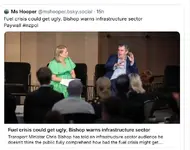
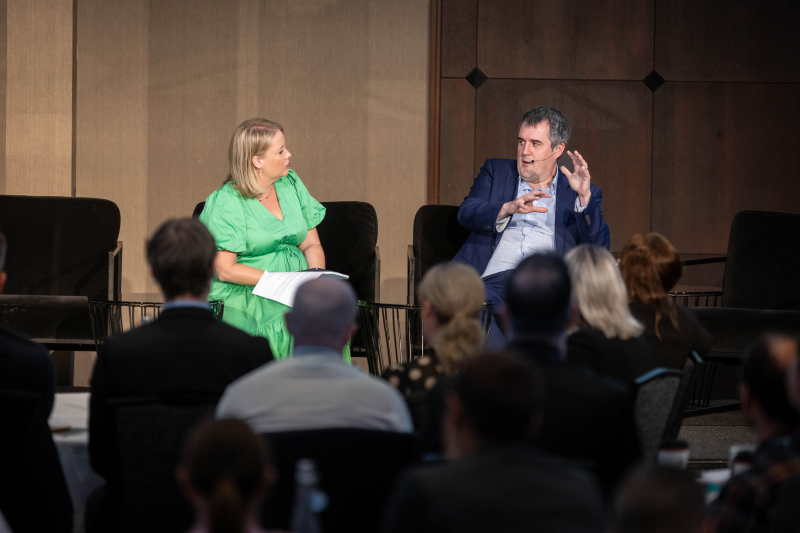
 businessdesk.co.nz

Like claiming someone doesn’t pay any taxDon't want to be identified as a liar?
Post evidence, fact and quotes, links that link to the source.


Nope. You make the statement, present it as fact, you provide the proof. Otherwise it's a lie.Like claiming someone doesn’t pay any tax
Googles free for you to look up Hipkins
An opinion isn’t claiming a fact. If you don’t understand the difference you shouldn’t be posting on here!Nope. You make the statement, present it as fact, you provide the proof. Otherwise it's a lie.


An opinion isn’t claiming a fact. If you don’t understand the difference you shouldn’t be posting on here!
Here’s some reading for you. Now provide your evidence about not paying tax
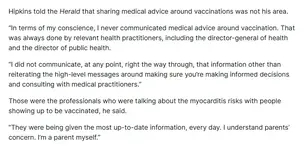
The Covid vaccine and the risk to under 18s: Hipkins defends not making advice public
Labour leader says he never shared medical info during the pandemic beyond the high-level.www.nzherald.co.nz
Cabinet paper shows Hipkins received ‘unnecessary risk’ advice about Covid jab for teens
When Hipkins had the advice, about 30,000 12-17s were yet to have a second vaccine.

That's actually quite concerning particularly as ot is regarding our kids.An opinion isn’t claiming a fact. If you don’t understand the difference you shouldn’t be posting on here!
Here’s some reading for you. Now provide your evidence about not paying tax
The Covid vaccine and the risk to under 18s: Hipkins defends not making advice public
Labour leader says he never shared medical info during the pandemic beyond the high-level.
Cabinet paper shows Hipkins received ‘unnecessary risk’ advice about Covid jab for teens
When Hipkins had the advice, about 30,000 12-17s were yet to have a second vaccine.
From the same article.That's actually quite concerning particularly as ot is regarding our kids.
And to say he never say the advice even though clearly it was presented to him is simply astounding.
The current government are misleading all of New Zealand on how dire this current petrol/diesel crisis is, as a result of an unnecessary war started by warmongers who come from the hard right of the political spectrum.That's actually quite concerning particularly as ot is regarding our kids.
And to say he never say the advice even though clearly it was presented to him is simply astounding.
Surprised the media isn’t making more of this given the potential consequences for Hipkins.That's actually quite concerning particularly as ot is regarding our kids.
And to say he never saw the advice even though clearly it was presented to him is simply astounding.
What is more critical to New Zealand - conjecture in the right wing media as a distraction for the disaster of this government or the looming massive economic crisis driven by the war in Iran?Surprised the media isn’t making more of this given the potential consequences for Hipkins.