Politics πŸ—³οΈ NZ Politics

Unfortunately she forgot to mention that Wellington Water are the owners and operators of all the potable water and sewage plants in the Wellington region.
The make up of Wellington Water is all the councils (reps) in the region including a Governance Board with Council reps. She may even be a rep seeing she is so concerned about it now.
Wellington Water sub contract out to Veolia for Ops and Maintenance.

So, in a weird old way, the accountability goes back to all the Councils, not that they would admit it

As for her other ideas, great if people are prepared to pay mega rates and higher taxes but unfortunately they're not. Most councils have enough trouble with inhouse lawnmowing and garden upkeep.
You employ a skilled contractor subcontracting work on a house say waterproofing. They stuff up and the head contractor goes under. Same if there’s an accident, etc. the head honcho and everyone involved gets smashed.

Council do the same situation - nothing to do with us, it’s those people’s fault.

Hmmm….
 
Oh dear…. I wonder where the $14 billion plus for Labour’s proposed Lake Onslow battery was going to from. Surely, not from Tax Payers.

I wonder what would happen if the power generators instead paid a lower dividend to share holders? Or used money for planned new generation development to pay it. Of course, the money could only come from the tax payer.
πŸ’― the industry gets privatized but doesn't invest in the infrastructure so we can't generate enough power so the private companies (albeit the govt owns half of some of them) puts out their hands for taxpayers to pay so they can generate more power to sell to us. That's an interesting model.
 
πŸ’― the industry gets privatized but doesn't invest in the infrastructure so we can't generate enough power so the private companies (albeit the govt owns half of some of them) puts out their hands for taxpayers to pay so they can generate more power to sell to us. That's an interesting model.
I’ll have a look later for the info on power generation but, to summarize it from memory, we’ll publicly generating the same power as we did 15-20 years ago so, on the surface, it looks like the genretailers haven’t spent anything on new generation, especially when you consider that the demand for power would have certainly gone up over that time.

But, that doesn’t take into account private solar schemes, more efficient appliances, lighting and a/c heating and cooling, more efficient distribution of power and demand control, and the continual reduction on the reliance on fossil fuels as more solar, wind, thermal and batteries come on line.

It’s not that the generators aren’t investing in NZ infrastructure…. It’s just not showing up in the overall numbers instead of considering the ratio of where that generation has come from. A quick Google search, in 2000, NZ generated 38,200 GWh of power of which 72% was from renewables and 28% fossils (mainly gas). In 2024, NZ generated 44,800 GWh of power of which 85% was from renewables and 15% fossils. That’s an increase in new renewable production by the genretailers of over 10,000 GWh.

Then, there’s a current pipeline of over 35,000 GWh of NZ generation by renewables and batteries that’s currently planned or underway. By 2045, it’s estimated that over 95% of all NZ’s power needs will be from renewables.

Not to bad for a country that we constantly hear has genretailers who β€œwon’t invest in new power generation” because they pay out too much in dividends.

Normal disclosure… we have a small share holding in Mercury which we brought as income, not growth, shares.
 
πŸ’― the industry gets privatized but doesn't invest in the infrastructure so we can't generate enough power so the private companies (albeit the govt owns half of some of them) puts out their hands for taxpayers to pay so they can generate more power to sell to us. That's an interesting model.
This is a an often run out line, but it’s not always true. Especially when vital risk mitigations are held with the state.

State govts and local councils have a rich history of underfunding to make things look better to ratepayers. A whole power plant blew up in QLD due to this very reason.
 
Quite an accomplishment 20 years worth. Just have to look at him to know he hasn’t gone without. Makes me laugh with Luxon too, I reckon he’d be the first pm that’s gotten fatter in his time as pm in a while
I heard this on the radio while parking yesterday. So, wasn't across all of it.

Still, my reaction was WTF 20 years. It is astounding how often we have politicians who can't disclose things from experience in getting security clearance or various things for work. If you are not sure It is better to ask or just disclose it anyway. Treat it like customs declare you have food and been around animals, and the customs guy says you went to Thailand and rode an elephant, that packet of chewing gum and lollies is fine. You might end up getting through quicker.

I think they said on the radio the number of investments as well. Sure, it is more than I'd have to declare, but still I'd stand by the above. Better to take the time and declare it.

How often this happens really makes you wonder about the quality of our public servants.
 
I heard this on the radio while parking yesterday. So, wasn't across all of it.

Still, my reaction was WTF 20 years. It is astounding how often we have politicians who can't disclose things from experience in getting security clearance or various things for work. If you are not sure It is better to ask or just disclose it anyway. Treat it like customs declare you have food and been around animals, and the customs guy says you went to Thailand and rode an elephant, that packet of chewing gum and lollies is fine. You might end up getting through quicker.

I think they said on the radio the number of investments as well. Sure, it is more than I'd have to declare, but still I'd stand by the above. Better to take the time and declare it.

How often this happens really makes you wonder about the quality of our public servants.
Would be viewed very differently if it was you or me, and there’s been plenty to varying degrees. I personally have no faith whatsoever in them and frustrated that we’ve forgotten they work for us, your very last statement is correct that they’re here to serve us but seems like lining their pockets in the process is deemed acceptable. Like a teacher or health professional, a politician should be a calling. That’s not to say salary should be poor but to serve those in need is key
 
If the government doesn't need tax to pay it's bills, why do I pay 15% GST on everything I buy or income tax or why did I get a "tax cut" as a landlord?

Why? Because what you're suggesting is one stream of money available to a government but overly relying on one stream such as the bond market is inflationary.... which is why we went into recession to battle the high inflation the COVID stimulus caused.

In that case, I wonder what you'll think when your power bill goes up to pay for it? 'I'm not paying this extra because the government doesn't need the money'.

The problem with MMT is that you need to keep on increasing taxes to ensure that the money released by the government to repay bonds and the interest due, isn't inflationary.


Here's what happens when a government commits itself to the path of MMT...


What you're suggesting isn't working for Japan where they're now having to reduce government spending after a stimulus which led to record numbers of investors leaving the Japanese bond market.
I think we're mixing up how the system works with what the real limits are.

Taxes.
Taxes still matter. They help manage spending in the economy and create demand for NZ dollars.
But for a country that issues its own currency, they don't operate like we view income in the "household" sense, as revenue that must be collected before spending.
As I've repeatedly pointed out, Govt payments are settled through the RBNZ via new money creation. Taxes remove money from circulation. That is the sequence the RBNZ and other central banks outline.
I don't think we apply taxation in the right places, the current system is a reflection of orthodox understanding. But that is another discussion.

Bonds and inflation.
Issuing bonds doesn't create new spending. It swaps cash in the banking reserves system for government bonds. When bonds mature, the reverse happens. Reserves replace the bond. No new money enters the economy.
Inflation happens when total spending pushes beyond what the economy and it's supply chains can actually produce. COVID inflation was largely about supply shocks and bottlenecks. The recession came from raising interest rates to smash demand.
We could have used other tools to target demand, but the Govt chose not to. This is in part due to advice the Govt receives from boffins within Treasury, who adhere to a different framework from the reality.

Lol, I'm not sure if you believe power bills are influenced by Govt daily expenditure. Your power bills are driven by our dire wholesale market and fluctuating supply constraints. Capacity!
Govt's decisions to not invest can certainly be blamed, but not current "debt" position.

MMT, Lebanon and Japan.
MMT describes the mechanics, it's not a framework to change to. It's describing the framework we operate in now. Our Govt operates under a spend, then tax and issue bonds ("debt") system, but we have been told we have a tax, borrow, spend system.
Lebanon has become a currency user. It's pegged itself to USD, borrowing heavily in a foreign currency and ceded control of its sovereign monetary system. NZ issues bonds ("debt") in NZ dollars and settles in NZ dollars. Not a worthy comparison at all.
Japan has had high public debt for decades without collapse. Recent bond activity reflects interest rate shifts, not insolvency.

My key understanding is that the real constraint for Govt is not tax revenue or debt ceilings. It is our productive capacity.

If we do not invest enough in energy supply, grid resilience, transport, housing, skills and infrastructure, the economy stays tight. Then every recovery runs into bottlenecks and turns into higher prices instead of higher output.
That system wide capacity does not get built at the scale required without public investment. Markets alone do not consistently deliver them.

If we underinvest in our productive base, inflation becomes more frequent and living standards wither. Managing inflation is not just about cutting demand.
It is about building enough economic capacity, targeting those bottlenecks so growth does not keep running into the same limits.

That's the framework I'm using.

Have a read of the paper from UCL, it outlines this from the UK perspective. We run similar expenditure systems, only ours is even simpler.
 
I think we're mixing up how the system works with what the real limits are.

Taxes.
Taxes still matter. They help manage spending in the economy and create demand for NZ dollars.
But for a country that issues its own currency, they don't operate like we view income in the "household" sense, as revenue that must be collected before spending.
As I've repeatedly pointed out, Govt payments are settled through the RBNZ via new money creation. Taxes remove money from circulation. That is the sequence the RBNZ and other central banks outline.
I don't think we apply taxation in the right places, the current system is a reflection of orthodox understanding. But that is another discussion.

Bonds and inflation.
Issuing bonds doesn't create new spending. It swaps cash in the banking reserves system for government bonds. When bonds mature, the reverse happens. Reserves replace the bond. No new money enters the economy.
Inflation happens when total spending pushes beyond what the economy and it's supply chains can actually produce. COVID inflation was largely about supply shocks and bottlenecks. The recession came from raising interest rates to smash demand.
We could have used other tools to target demand, but the Govt chose not to. This is in part due to advice the Govt receives from boffins within Treasury, who adhere to a different framework from the reality.

Lol, I'm not sure if you believe power bills are influenced by Govt daily expenditure. Your power bills are driven by our dire wholesale market and fluctuating supply constraints. Capacity!
Govt's decisions to not invest can certainly be blamed, but not current "debt" position.

MMT, Lebanon and Japan.
MMT describes the mechanics, it's not a framework to change to. It's describing the framework we operate in now. Our Govt operates under a spend, then tax and issue bonds ("debt") system, but we have been told we have a tax, borrow, spend system.
Lebanon has become a currency user. It's pegged itself to USD, borrowing heavily in a foreign currency and ceded control of its sovereign monetary system. NZ issues bonds ("debt") in NZ dollars and settles in NZ dollars. Not a worthy comparison at all.
Japan has had high public debt for decades without collapse. Recent bond activity reflects interest rate shifts, not insolvency.

My key understanding is that the real constraint for Govt is not tax revenue or debt ceilings. It is our productive capacity.

If we do not invest enough in energy supply, grid resilience, transport, housing, skills and infrastructure, the economy stays tight. Then every recovery runs into bottlenecks and turns into higher prices instead of higher output.
That system wide capacity does not get built at the scale required without public investment. Markets alone do not consistently deliver them.

If we underinvest in our productive base, inflation becomes more frequent and living standards wither. Managing inflation is not just about cutting demand.
It is about building enough economic capacity, targeting those bottlenecks so growth does not keep running into the same limits.

That's the framework I'm using.

Have a read of the paper from UCL, it outlines this from the UK perspective. We run similar expenditure systems, only ours is even simpler.
My understanding is that the three main reasons NZ couldn't successfully move to a full MMT model is:
1. The economy just isn't big enough... it looks as if it would work better in US, China or Japan than here.
2. We're too reliant on exporting and importing... internal inflation can be brought under control through levers such as increased taxes to reduce the money in the system but external inflation, would be harder to deal with... I'd hate to go down the Trump tariff route.
3. Most of the money needs to be from local saving and not overseas investors.... i.e. when the bonds are repaid, the money would re-enter the NZ economy.

In my opinion, the last would be the most difficult to deal with.

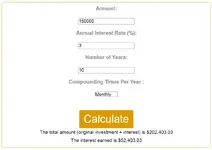
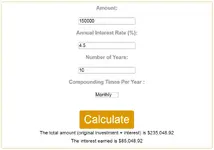
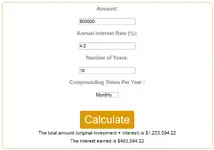
Let's say Jack got a $150,000 inheritance he wanted to spend in 10 years' time.... the length of a current NZ government bond. He looks at three options.... i. a ten-year government bond, ii. a balance managed fund for the same period or iii. using at as a deposit for an investment property. The screenshots below are from moneyhubs compounding interest calculator.

Government Bond:
Over the last ten years, after 33% tax, a government bonds have averaged 3%. Through that into a compounding interest calculator, deduct the original $150,000 deposit, and Jack walks away with just over $52,000 profit.

1770948370287.webp
Managed Fund:
A quick google search and the average return for a balanced managed fund run by Fisher Funds before tax was 6.7% so, at 33% tax, that's a return of 4.5% after fees and taxes. Using the compounding calculator again and after deducting Jack's deposit, he walks away with $85,000 profit.... or $33,000 better off.

1770949228099.webp

Investment Property:
Jack does the unthinkable and uses the $150,000 as a deposit for an investment property. The rent doesn't cover all the expenses, so Jack contributes $400 per month ($48,000 over the same ten-year period). Over the last ten years, the average house increase nationwide has been between 5-6% but the long-term inflation adjusted average PA is 4%... so I'll use that. Using the compounding interest calculator, if Jack was to sell his investment property for $1.25 mil in ten years, after deducting his initial deposit, mortgage balance (30yr mortgage @ 5% average PA interest balance of $525,000 to be repaid to bank) and his "top up" amount, that would give Jack a profit of $525,000.... or just under $475,000, more than investing in government bonds.

1770949945655.webp

To try and make people turn away from KiwiSaver and other managed funds to government bonds to get a reduction in profit of 39% would be had enough.... imagine how much the government would need to disincentivice property investments for people to think that taking a 90% reduction in profit would think.

One of the hardest things I've found while looking at this, is most of the "information" isn't neutral but slanted towards a pro or anti biase. Too much off it seems to be left vs right.... it seems to may that MMT isn't that way at all but, to some degree, already happens.

I read someone so suggested Rob Muldoon was an advocate of MMT... pretty impossible because Mosler didn't finalise MMT until ten years after Muldoon was booted out by Lange. Also, the person who suggested it totally ignored one key point.... Muldoon borrowed money from overseas institutions, not through issuing government bonds.

Another suggested Robinson followed it with the COVID stimulus. Again, wrong because the money wasn't used for infrastructure expansion but primarily through bank lending and "social" spending.

It would be interesting to see how much we could actually "trust" our politicians if they understood we're already partly there, at least to a MMT like system, and would use the money available to them wisely on infrastructure and not either vanity projects or vote winning.... both of which I think would be inflationary.
 
Govt payments are settled through the RBNZ via new money creation. Taxes remove money from circulation.
Isn’t this implying that taxes aren’t linked to spending because the govt can spend what it likes and generate new money?

Taxes still need to roughly equal money produced over the long term therefore taxes constrain money produced in an indirect way?

Otherwise debt is accumulated resulting in higher interest costs, inflation and NZ$ falling affecting imports and exports.

Therefore taxes arent everything but very linked to what a govt con spend.


My key understanding is that the real constraint for Govt is not tax revenue or debt ceilings. It is our productive capacity.
Yes, but the govt does not = the economy. Govt should run counter cyclical to the economy.

If the economy is already tight - Government competes for workers, construction materials, machinery, imports, etc. That pushes up wages, prices and project costs.

In effect govts compete with private businesses and private businesses may scale back when govts spend/ costs rise. This is real world crowding out of resources via financial govt spending.

Eg govt after Covid ramped up spending by borrowing massively and spending, smashing businesses - everyone remembers the dire lack of labour then (businesses closing for lack of available staff). This is a real world example of your focus on productive capacity.

This period highlights why the Greens budget to spending $22b a year extra can’t be met by the resources in the economy? The focus should be on growing the pie, productivity, education, etc.

Grow and spend not tax and spend?
 
And all the righties on here.
You conveniently left off the part about increasing productivity which the righties, whatever that is, have been advocating for the whole time. They already know. You may have missed it though as it's often referred to as pie and the lefties, whatever that is, when they hear that get hungry and tend to lean towards just thinking about how they can get a piece of someone else's.
 
You conveniently left off the part about increasing productivity which the righties, whatever that is, have been advocating for the whole time. They already know. You may have missed it though as it's often referred to as pie and the lefties, whatever that is, when they hear that get hungry and tend to lean towards just thinking about how they can get a piece of someone else's.
The righties on here of your ilk are advocating for doubling down on neoliberalism and it's effects, returning back to the 1950s and emulating the US's descent into fascsm.
 
Back
Top Bottom