
John Nick
🔥
Streak Master
It wasn't banned It was the new applications that were stopped.Probably shouldnt have banned gas exploration then. Supply/Demand and what not.
Follow along with the video below to see how to install our site as a web app on your home screen.
Note: This feature may not be available in some browsers.
It wasn't banned It was the new applications that were stopped.Probably shouldnt have banned gas exploration then. Supply/Demand and what not.

Sounds like an amazing regulatory environment to invest in. No risk at all.It wasn't banned It was the new applications that were stopped.

Maybe looking at other sources instead of fossil fuels.Sounds like an amazing regulatory environment to invest in. No risk at all.
Was any gas exploration undertaken after 2018?
Then it’s tax payer fundedMaybe looking at other sources instead of fossil fuels.
Not sure Frank. Not in my area of expertiseSounds like an amazing regulatory environment to invest in. No risk at all.
Was any gas exploration undertaken after 2018?
Doesn’t seem like it. Last permit was surrendered in 2021 apparently . Doubt any was done 2018 -2021. Especially with the govt signalling it was anti gas. Which is crazy since wind and solar need MORE gas to firm.Not sure Frank. Not in my area of expertise

So no new permits, effectively a ban on new exploration, no better alternatives available and if there were, were incredibly cost prohibitive, supply dropped, prices rose and the previous government thought they better start on a transition plan away from gas, years after effectively banning it. As the article says, long term certainty and a plan goes a long way. Basically the complete opposite of what happened.Doesn’t seem like it. Last permit was surrendered in 2021 apparently . Doubt any was done 2018 -2021. Especially with the govt signalling it was anti gas. Which is crazy since wind and solar need MORE gas to firm.

Flexible generation?More electricity generation
Solar, wind and battery/storage. Consented and under constructionFlexible generation?
Love your analogy there defensivebombSolar, wind and battery/storage. Consented and under construction
It won’t shoot the lights out but we are planning on lower unit prices in the near term
So inflexible wind and solar and short term battery storage. Meaning you will be more reliant on gas as the price setter.Solar, wind and battery/storage. Consented and under construction
It won’t shoot the lights out but we are planning on lower unit prices in the near term
Yikes. You guys are having to revert back to dieselSolar, wind and battery/storage. Consented and under construction
It won’t shoot the lights out but we are planning on lower unit prices in the near term

 newsroom.co.nz

Love your humourThis government is so utterly destructive

Lost in transition: The businesses trapped by New Zealand’s energy crisis
Behind the nation's energy crisis are businesses quietly fighting to survive - many feel they have nothing but bad options.www.rnz.co.nz


Learned a new term from an American commentator “right to build”One of the main reason any government needed to review the RMA is that it was set at the lowest denominator and is extremely punitive. It basically assumed that every application was going to destroy the environment or an area of cultural significance or destroy the livability within a neighbourhood.
The other issue is the inflexibility within the Building Act meaning councils couldn’t control things like the area or volume of excavation, stormwater area controls, impervious and pervious areas couldn’t be controlled by a building consent but forcing people to get a resource consent.
Most other countries have moved their versions of the RMA to move beyond being punitive to understanding that a lot of their controls were limiting the explanation of green energy solutions. So they changed what applications needed approval (ie ones which adversely effect the environment or areas of cultural significance) but reduced/removed the need for their version off a resource consent for project such as green power generation projects along with the volume of information required for approval and who needed to be consulted or permission required.
Problem with NZ, is we’re too tribal and our major political parties aligned too much to their followers/ financial employers to do this properly. Labour didn’t go far enough in recognising the need to make it easier for green projects to be undertaken while National will be too willing to sacrifice the environment in the name of “progress” and “property rights”.
National went too far with the fast track process for projects and should have limited to only those projects like green energy which wouldn’t have effects on areas of cultural significance or the environment.
There was the opportunity for both parties to get it right….. but neither have/did. Too worried about the election cycle and their backers than to look at the best way to allow progress without cultural or environmental compromise.
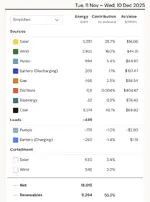
Thanks Frank. My comment was to correct your statement about gas exploration being canceled by the previous government which was factually incorrect.@John Nick here’s a 30 day snapshot of the Aus market. As you can see battery and gas enjoy higher prices than coal. Solar and wind are both lower of course but that’s masked by the prices being negative (worthless) during peak supply.
View attachment 15121
 .
.


