
Heaven forbid.... although the imploding in NZF might be worth the price of admission.What about the Matua Jones with his fishy fingers?
Navigation
Install the app
How to install the app on iOS
Follow along with the video below to see how to install our site as a web app on your home screen.
Note: This feature may not be available in some browsers.
More options
You are using an out of date browser. It may not display this or other websites correctly.
You should upgrade or use an alternative browser.
You should upgrade or use an alternative browser.
Politics 🗳️ NZ Politics
- Thread starter wizard of Tauranga
- Start date
NZWarriors.com
They had some great candidates like Tracey Martin at one pointHeaven forbid.... although the imploding in NZF might be worth the price of admission.
From what I've heard, there's no way Ron Mark wants to return to Parliament, but I always had a lot of time for him.They had some great candidates like Tracey Martin at one point
Tracey Martin and Winnie now have too much history for her to be brought back into the fold. Although, she would have broadened the parties appeal to more women with her liberal feminist slant.
NZWarriors.com
I she still involved is she? I had no idea, I voted for them a couple of times years back but don’t give them much consideration these daysFrom what I've heard, there's no way Ron Mark wants to return to Parliament, but I always had a lot of time for him.
Tracey Martin and Winnie now have too much history for her to be brought back into the fold. Although, she would have broadened the parties appeal to more women with her liberal feminist slant.
She lost her seat in 2020 and NZF didn't make it passed the 5% threshold. In 2021, she and fellow former MP Jenny Marcroft signed from NZF saying the party needed to return to its roots and rebuild. She also she that felt her political views more now more closely aligned to Labour than NZF.I she still involved is she? I had no idea, I voted for them a couple of times years back but don’t give them much consideration these days
In April of last year, Winnie blamed her for pushing for going behind his back to gain support for a bill he didn't like.... something she denied saying "Before you decide to insult people and question their honesty and integrity, you might want to get the facts."

I woke up today with an urge to write. I don't know where best to put this, but it sure reeks of politics.
Blunted Razor shows Wah’s got what the All Blacks need.
As a dyed in the wool Leaguie, I'm always intrigued by the machinations of the Union establishment. In popping my head over the fence, I can see, our neighbours are not doing well. Though not a full on domestic, dad has been sent packing. His luggage wheeled out onto the curb, he’s waiting for the first cab out of All Blacks headquarters.
Scott ‘Razor’ Robertson’s sacking was out of the blue. For all the propaganda surrounding his usurping of Ian Foster, it sounded like the NZRU got their man. ‘Effective communicator’, ‘Story teller’ ‘well liked’ - all adjectives used to describe Robertson as the man to take the All Blacks well into the 21st century. Undoubtedly his record with the Crusaders was proof that this surfing, breakdancing, humanist could get results in the macho world of Rugby. How the tides turn.
In the two years of Robertson’s tenure at the top, much of the commentary surrounding the All Blacks playstyle described it as rudderless - lacking the grit of yesteryear. This is of course despite a 20 win 7 loss record - a win rate of 74% being nothing to scoff at. But the pressure of the media surrounding the All Blacks could never let go of a 29 - 23 defeat against the Pumas, nor the 43 - 10 score against the Springboks in Wellington.
Any team in any sport would take a 74% win rate - perhaps Razor’s problem was that it didn’t come with any silverware. There is an outrageous expectation of excellence for the All Blacks and the old codgers at HQ (newspaper readers they are) start the finger pointing to save themselves. This is as if the world of Rugby is supposed to sit still and wait so the All Blacks can come around every year and mercilessly stomp every other team. Other countries have talent. Other countries improve. That's what makes the international game exciting in the first place.
Professional sport is an odd beast. Not only are you a team, but you’re a brand, and the All Blacks are one that have positioned themselves in the heart of the kiwi identity, so winning is everything. But for the shadowy ‘management’ behind the brand it’s most personal. New Zealand Rugby chairman David Kirk claims he ‘wasn’t seeing the trajectory’ to give him confidence in Razor in the lead up to the World Cup in 2027. Who knew Chairman Kirk had the eye of Dan Carter in lining up success? Perhaps in this case he’s more of a Stephen ‘Beaver’ Donald kind of guy - just squeaking in.
To give this more context, let's jump codes and look at the Warriors. There are some parallels in the style of Razor to the Warriors topman Andrew ‘Webby’ Webster. Both friendly man managers, both good communicators, both enthusiastic about the core business of their roles - coaching the team and connecting with the players. The art of coaching is likely the most similar aspect between the codes. The X’s and O’s might be placed differently, but the role requires the same touch. Be it a different code with different expectations, being perennial underachievers or because of an altogether different worldview, compared to Razor, Webby basks in the glow of thanks, success, and support. This is despite the Warriors win rate of 14 wins and 11 losses last season. So what's with the contrasting reception of the coaches?
For one, the All Blacks have enjoyed being lionised in New Zealand media and integrated within the national hegemony, it's much more ‘ours’ - but that's a yarn for another time. Is it simply that we allow League coaches to be human, while we demand Union coaches be machines? The All Blacks have been institutionalized in the New Zealand psyche as a symbol of infallible excellence. When they lose, it feels like a crack in the national GDP. We’ve become "spoiled" by decades of a 75% plus win rate, leading to a toxic culture of "buyers remorse" where even a winning coach is sacked if the "vibe" doesn't match the legacy.
In contrast, Webster’s Warriors operate in the "Up the Wahs" economy—where grit, scramble, and emotional connection are the primary currencies. While the NZRU was busy checking Razor’s "trajectory" toward a 2027 trophy, Webby was busy building a culture where players would run through a brick wall for him. The All Black establishment wants a corporate calculator at the helm, League fans just want a leader who gives a damn.
Ultimately, the contrasting fortunes of Razor and Webby reveal a fundamental rift in how we view our national teams. The NZRU remains afraid and protective, resistant to change, demanding a coach who reflects the establishment: cold, calculating, and indifferent to anything but the scoreboard. They wanted a CEO in a tracksuit; instead, they got a surfer who danced.
In the NRL, the intensity is far more visceral. A string of losses is a literal danger to your livelihood - round 6 is affectionately known as Bluey’s round (poor guy). Yet, Webby thrives because he is the glue, not the blade. While the All Blacks' hierarchy panicked because they 'couldn’t see the trajectory' of a 74% win rate, the Warriors faithful found something more valuable than a trophy: a pulse.
Razor tried to slice through convention, but the establishment was too thick to cut. Perhaps the All Blacks don’t need a sharper edge; they need to look across the fence at Mt Smart and realize that in the modern game, the 'grit' they’re looking for isn't found in a corporate manual - it’s found in Webby’s glue - connection.
Blunted Razor shows Wah’s got what the All Blacks need.
As a dyed in the wool Leaguie, I'm always intrigued by the machinations of the Union establishment. In popping my head over the fence, I can see, our neighbours are not doing well. Though not a full on domestic, dad has been sent packing. His luggage wheeled out onto the curb, he’s waiting for the first cab out of All Blacks headquarters.
Scott ‘Razor’ Robertson’s sacking was out of the blue. For all the propaganda surrounding his usurping of Ian Foster, it sounded like the NZRU got their man. ‘Effective communicator’, ‘Story teller’ ‘well liked’ - all adjectives used to describe Robertson as the man to take the All Blacks well into the 21st century. Undoubtedly his record with the Crusaders was proof that this surfing, breakdancing, humanist could get results in the macho world of Rugby. How the tides turn.
In the two years of Robertson’s tenure at the top, much of the commentary surrounding the All Blacks playstyle described it as rudderless - lacking the grit of yesteryear. This is of course despite a 20 win 7 loss record - a win rate of 74% being nothing to scoff at. But the pressure of the media surrounding the All Blacks could never let go of a 29 - 23 defeat against the Pumas, nor the 43 - 10 score against the Springboks in Wellington.
Any team in any sport would take a 74% win rate - perhaps Razor’s problem was that it didn’t come with any silverware. There is an outrageous expectation of excellence for the All Blacks and the old codgers at HQ (newspaper readers they are) start the finger pointing to save themselves. This is as if the world of Rugby is supposed to sit still and wait so the All Blacks can come around every year and mercilessly stomp every other team. Other countries have talent. Other countries improve. That's what makes the international game exciting in the first place.
Professional sport is an odd beast. Not only are you a team, but you’re a brand, and the All Blacks are one that have positioned themselves in the heart of the kiwi identity, so winning is everything. But for the shadowy ‘management’ behind the brand it’s most personal. New Zealand Rugby chairman David Kirk claims he ‘wasn’t seeing the trajectory’ to give him confidence in Razor in the lead up to the World Cup in 2027. Who knew Chairman Kirk had the eye of Dan Carter in lining up success? Perhaps in this case he’s more of a Stephen ‘Beaver’ Donald kind of guy - just squeaking in.
To give this more context, let's jump codes and look at the Warriors. There are some parallels in the style of Razor to the Warriors topman Andrew ‘Webby’ Webster. Both friendly man managers, both good communicators, both enthusiastic about the core business of their roles - coaching the team and connecting with the players. The art of coaching is likely the most similar aspect between the codes. The X’s and O’s might be placed differently, but the role requires the same touch. Be it a different code with different expectations, being perennial underachievers or because of an altogether different worldview, compared to Razor, Webby basks in the glow of thanks, success, and support. This is despite the Warriors win rate of 14 wins and 11 losses last season. So what's with the contrasting reception of the coaches?
For one, the All Blacks have enjoyed being lionised in New Zealand media and integrated within the national hegemony, it's much more ‘ours’ - but that's a yarn for another time. Is it simply that we allow League coaches to be human, while we demand Union coaches be machines? The All Blacks have been institutionalized in the New Zealand psyche as a symbol of infallible excellence. When they lose, it feels like a crack in the national GDP. We’ve become "spoiled" by decades of a 75% plus win rate, leading to a toxic culture of "buyers remorse" where even a winning coach is sacked if the "vibe" doesn't match the legacy.
In contrast, Webster’s Warriors operate in the "Up the Wahs" economy—where grit, scramble, and emotional connection are the primary currencies. While the NZRU was busy checking Razor’s "trajectory" toward a 2027 trophy, Webby was busy building a culture where players would run through a brick wall for him. The All Black establishment wants a corporate calculator at the helm, League fans just want a leader who gives a damn.
Ultimately, the contrasting fortunes of Razor and Webby reveal a fundamental rift in how we view our national teams. The NZRU remains afraid and protective, resistant to change, demanding a coach who reflects the establishment: cold, calculating, and indifferent to anything but the scoreboard. They wanted a CEO in a tracksuit; instead, they got a surfer who danced.
In the NRL, the intensity is far more visceral. A string of losses is a literal danger to your livelihood - round 6 is affectionately known as Bluey’s round (poor guy). Yet, Webby thrives because he is the glue, not the blade. While the All Blacks' hierarchy panicked because they 'couldn’t see the trajectory' of a 74% win rate, the Warriors faithful found something more valuable than a trophy: a pulse.
Razor tried to slice through convention, but the establishment was too thick to cut. Perhaps the All Blacks don’t need a sharper edge; they need to look across the fence at Mt Smart and realize that in the modern game, the 'grit' they’re looking for isn't found in a corporate manual - it’s found in Webby’s glue - connection.
NZWarriors.com

Did you write that mate? Its a really good read.I woke up today with an urge to write. I don't know where best to put this, but it sure reeks of politics.
Blunted Razor shows Wah’s got what the All Blacks need.
As a dyed in the wool Leaguie, I'm always intrigued by the machinations of the Union establishment. In popping my head over the fence, I can see, our neighbours are not doing well. Though not a full on domestic, dad has been sent packing. His luggage wheeled out onto the curb, he’s waiting for the first cab out of All Blacks headquarters.
Scott ‘Razor’ Robertson’s sacking was out of the blue. For all the propaganda surrounding his usurping of Ian Foster, it sounded like the NZRU got their man. ‘Effective communicator’, ‘Story teller’ ‘well liked’ - all adjectives used to describe Robertson as the man to take the All Blacks well into the 21st century. Undoubtedly his record with the Crusaders was proof that this surfing, breakdancing, humanist could get results in the macho world of Rugby. How the tides turn.
In the two years of Robertson’s tenure at the top, much of the commentary surrounding the All Blacks playstyle described it as rudderless - lacking the grit of yesteryear. This is of course despite a 20 win 7 loss record - a win rate of 74% being nothing to scoff at. But the pressure of the media surrounding the All Blacks could never let go of a 29 - 23 defeat against the Pumas, nor the 43 - 10 score against the Springboks in Wellington.
Any team in any sport would take a 74% win rate - perhaps Razor’s problem was that it didn’t come with any silverware. There is an outrageous expectation of excellence for the All Blacks and the old codgers at HQ (newspaper readers they are) start the finger pointing to save themselves. This is as if the world of Rugby is supposed to sit still and wait so the All Blacks can come around every year and mercilessly stomp every other team. Other countries have talent. Other countries improve. That's what makes the international game exciting in the first place.
Professional sport is an odd beast. Not only are you a team, but you’re a brand, and the All Blacks are one that have positioned themselves in the heart of the kiwi identity, so winning is everything. But for the shadowy ‘management’ behind the brand it’s most personal. New Zealand Rugby chairman David Kirk claims he ‘wasn’t seeing the trajectory’ to give him confidence in Razor in the lead up to the World Cup in 2027. Who knew Chairman Kirk had the eye of Dan Carter in lining up success? Perhaps in this case he’s more of a Stephen ‘Beaver’ Donald kind of guy - just squeaking in.
To give this more context, let's jump codes and look at the Warriors. There are some parallels in the style of Razor to the Warriors topman Andrew ‘Webby’ Webster. Both friendly man managers, both good communicators, both enthusiastic about the core business of their roles - coaching the team and connecting with the players. The art of coaching is likely the most similar aspect between the codes. The X’s and O’s might be placed differently, but the role requires the same touch. Be it a different code with different expectations, being perennial underachievers or because of an altogether different worldview, compared to Razor, Webby basks in the glow of thanks, success, and support. This is despite the Warriors win rate of 14 wins and 11 losses last season. So what's with the contrasting reception of the coaches?
For one, the All Blacks have enjoyed being lionised in New Zealand media and integrated within the national hegemony, it's much more ‘ours’ - but that's a yarn for another time. Is it simply that we allow League coaches to be human, while we demand Union coaches be machines? The All Blacks have been institutionalized in the New Zealand psyche as a symbol of infallible excellence. When they lose, it feels like a crack in the national GDP. We’ve become "spoiled" by decades of a 75% plus win rate, leading to a toxic culture of "buyers remorse" where even a winning coach is sacked if the "vibe" doesn't match the legacy.
In contrast, Webster’s Warriors operate in the "Up the Wahs" economy—where grit, scramble, and emotional connection are the primary currencies. While the NZRU was busy checking Razor’s "trajectory" toward a 2027 trophy, Webby was busy building a culture where players would run through a brick wall for him. The All Black establishment wants a corporate calculator at the helm, League fans just want a leader who gives a damn.
Ultimately, the contrasting fortunes of Razor and Webby reveal a fundamental rift in how we view our national teams. The NZRU remains afraid and protective, resistant to change, demanding a coach who reflects the establishment: cold, calculating, and indifferent to anything but the scoreboard. They wanted a CEO in a tracksuit; instead, they got a surfer who danced.
In the NRL, the intensity is far more visceral. A string of losses is a literal danger to your livelihood - round 6 is affectionately known as Bluey’s round (poor guy). Yet, Webby thrives because he is the glue, not the blade. While the All Blacks' hierarchy panicked because they 'couldn’t see the trajectory' of a 74% win rate, the Warriors faithful found something more valuable than a trophy: a pulse.
Razor tried to slice through convention, but the establishment was too thick to cut. Perhaps the All Blacks don’t need a sharper edge; they need to look across the fence at Mt Smart and realize that in the modern game, the 'grit' they’re looking for isn't found in a corporate manual - it’s found in Webby’s glue - connection.
I did, thanks for the feedback. It was literally my first thought on waking this morning. About 1.5hrs to write.Did you write that mate? Its a really good read.

Great work.I did, thanks for the feedback. It was literally my first thought on waking this morning. About 1.5hrs to write.
NZWarriors.com
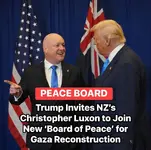
NZ’s silence on anything America is doing must be resonating. Wonder how much of the billion $ we’d have to contribute?
US 'wants countries to pay $1bn to stay on Gaza peace board'
Donald Trump wants countries to pay $1bn to be permanent members of the US-backed Board of Peace, according to reports.
 www.radioroyal.org
At least if he joins we know it's going to be rubbish and failView attachment 15441
NZ’s silence on anything America is doing must be resonating. Wonder how much of the billion $ we’d have to contribute?
US 'wants countries to pay $1bn to stay on Gaza peace board'
Donald Trump wants countries to pay $1bn to be permanent members of the US-backed Board of Peace, according to reports.

But seriously. Fuck no, stay away from anything Trump related.
Last edited:
If you needed proof that KO had an open cheque policy….. here it is….

 www.nzherald.co.nz
'They will lose money': Kāinga Ora to sell land it bought for $70.4m in 2021
The state housing agency faced claims it overpaid for the Ferncliffe Farm site.
NZWarriors.com
More corruption
 www.nzherald.co.nz
Associate Justice Minister Nicole McKee shoulder-tapped two people for the Government’s firearms advisory group before delegating the process to Justice Minister Paul Goldsmith “to avoid any potential conflicts of interest”.
Goldsmith has defended the process, calling it “appropriate”.
But Gun Control NZ co-founder Philippa Yasbek – who is no longer in the Ministerial Arms Advisory Group (MAAG) after her term expired and McKee didn’t reappoint her – has accused the Government of cronyism.
“It’s basically jobs for your mates,” Yasbek told the Herald.
“New Zealand has a long tradition of doing merit-based appointments, not a crony-based system where appointments are who you know rather than what your abilities are.”
Make a beeline for the Beehive
Get weekly politics headlines with commentary from our political experts straight to your inbox.
Advertise with NZME.
The MAAG was set up in 2020-21, following the Christchurch terror attack, and has the ear of the minister responsible for firearms laws. It has nine members representing several stakeholder groups.
The search for two new members took place last year after four MAAG members came to the end of their three-year terms. McKee decided to reappoint two (Shayne Walker and Debbie Lamb) and cut two (Yasbek and Helene Leaf).
McKee also agreed to the Ministry of Justice seeking nominations through “agencies, ministers, Cabinet, caucus and interested groups”, according to a ministry briefing in July, released under the Official Information Act (OIA).
A week and a half later, she changed her mind when the ministry sought permission to invite nominations from groups including the police, Te Puni Kōkiri, the Māori Firearms Forum, MAAG members and the Arms Engagement Group. The ministry should only proceed if there were no nominations from her coalition colleagues, McKee’s private secretary told the ministry.
Associate Justice Minister and Act MP Nicole McKee. Photo / Mark Mitchell
Associate Justice Minister and Act MP Nicole McKee. Photo / Mark Mitchell
According to the OIA documents, McKee, who is an Act MP, then told two people she wanted for the group (Mike Spray and Michelle Roderick-Hall) to send their CVs to the Act Party’s chief of staff at the time, Andrew Ketels, who nominated them.
To avoid the perception of a conflict of interest, McKee handed over the rest of the process to Goldsmith, who took a paper to Cabinet recommending Spray and Roderick-Hall; this was approved and gazetted in November.
In his paper, Goldsmith said the process was appropriate; one of several ways to seek nominations is to ask the responsible minister, according to Public Service Commission guidelines.
Both he and McKee declined to comment to the Herald, referring questions on the appropriateness of the process to the Cabinet Office, which referred them back to ministers.
“The Cabinet Office provides guidance on processes for appointments made by ministers,” the office told the Herald in a statement.
“It is for ministers to comment on particular decisions and actions.”
‘Nicole has asked I send these’
McKee may well know the right people for the MAAG; coalition parties have defended her as an expert when faced with criticism over aspects of her firearms law reforms.
Spray was the national manager of the NZ Deer Association’s HUNTS programme, and is known for his knowledge and experience in firearms and hunter safety.
Roderick-Hall, who doesn’t have a firearms licence, has worked with the Whakatūpato programme to promote firearms safety and awareness in rural communities.
They are both familiar to McKee; Spray has worked for McKee’s company Firearms Safety Specialists NZ Limited, which founded Whakatūpato.
As a former spokeswoman for the Council of Licensed Firearms Owners, McKee’s decisions and associations have also been closely scrutinised; she has rejected criticism of her being “in the pocket” of the gun lobby.
Yasbek said Spray and Roderick-Hall might well be good additions to the MAAG, but it was hard to know without a wide and open process for nominations.
McKee not only restricted nominations to coalition partners (none were offered from National or NZ First), but her fingerprints were all over the process, she said.
Gun Control NZ co-founder Philippa Yasbek.
Gun Control NZ co-founder Philippa Yasbek.
“Nicole has asked that I send these to you,” Spray said in a July email to Ketels that included his CV, which Ketels then forwarded to the appropriate person alongside the comment: “Act nominates Mike Spray for the Minister’s Arms Advisory Group.”
In August, McKee’s ministerial advisor sent Ketels the details for Roderick-Hall (who had sent her details through earlier) along with the message: “Another one for nomination please good sir.”
McKee’s office was also provided with advice on a potential conflict of interest, but this is fully redacted in the OIA documents on three grounds, including the possibility of unreasonably prejudicing the commercial position of a person in the information.
In September, McKee’s private secretary told the Justice Ministry that Goldsmith would take over the process to “avoid a conflict of interest”.
Yasbek, who uncovered the paper trail through the OIA, said McKee’s involvement before “washing her hands” by handing the process to Goldsmith was damaging to people’s trust in the system.
“People believe the game is rigged. And it’s part of a broader pattern, a slow corrosion of how our democracy functions, and of trust in public institutions.
“The Act Party has a track record on this,” she added, citing the appointment of Stephen Rainbow as Human Rights Commissioner.
Justice Minister Paul Goldsmith. Photo / Mark Mitchell
Justice Minister Paul Goldsmith. Photo / Mark Mitchell
This was criticised at the time as the responsible minister, Goldsmith, kowtowing to Act after Rainbow, who had made comments described as “transphobic”, was not initially shortlisted for the role.
Act leader David Seymour then put forward Rainbow for the position, and he was added to the shortlist and eventually appointed, despite an independent panel not recommending him.
In December, the High Court ruled that Rainbow’s appointment was unlawful on two grounds: the minister failed to apply the correct legal test, and failed to take mandatory considerations into account. Goldsmith is considering an appeal.
Invited to respond to Yasbek’s characterisation of the process as “jobs for your mates”, Seymour declined to comment.
Over to you, Goldsmith
A Ministry of Justice document landed on Goldsmith’s desk in September, saying: “To avoid any potential conflicts of interest, the Associate Minister of Justice, Hon Nicole McKee, has requested that you make the decisions required in this briefing.”
In his subsequent Cabinet paper proposing Spray and Roderick-Hall for the MAAG, Goldsmith said: “I can confirm that an appropriate process has been followed in selecting the proposed appointees, in terms of the Public Service Commission appointment guidelines.”
Those guidelines include nine ways to find candidates to fill a vacancy, one of which is via the responsible minister.
Under the “conflicts of interest” heading in his Cabinet paper, Goldsmith said: " I can confirm that checks for conflicts of interest have been completed in accordance with the Public Service appointment guidelines."
Cabinet approved the nominees, and Goldsmith gazetted the information in November.
Yasbek said the whole episode fuelled her concerns about the Arms Bill, currently before Parliament, which aims to update the 43-year-old Arms Act.
It has several new offences while easing some of the regulatory burden. It would also create a new regulator, replacing the Firearms Safety Authority, whose decisions can be appealed to a new firearms licensing review panel.
The responsible minister – currently McKee – would recommend a person to head the new body (appointed by the Governor-General), and also have the power to appoint panel members.
Yasbek believed this would enable “regulatory capture”, allowing McKee to choose the regulator’s leader, and stack the panel with whoever she wanted.
“This is a fancy way of saying that the regulator serves the interests of the regulated group rather than the broader public interest, prioritising the convenience of gun owners rather than focusing on public safety,” she claimed.
A spokesman for McKee said it would be a “transparent and contestable” process to hire the agency chief executive, with Cabinet oversight. The process would be led by the Justice Secretary, though this is not required in the bill as it currently stands.
“It is proposed in the Arms Bill that the Secretary for Justice provide advice to the responsible minister,” the spokesman said.
“The responsible minister will recommend a candidate to Cabinet for their consideration. Following Cabinet agreement, the responsible Minister will make a recommendation to the Governor-General.”
There is a month left to make submissions on the bill.
Derek Cheng is a senior journalist who started at the Herald in 2004. He has worked several stints in the press gallery team and is a former deputy political editor.
'Jobs for your mates': How Act minister secretly picked new firearms group members
The nominations were made in the name of Paul Goldsmith, who has defended the process.
Associate Justice Minister Nicole McKee shoulder-tapped two people for the Government’s firearms advisory group before delegating the process to Justice Minister Paul Goldsmith “to avoid any potential conflicts of interest”.
Goldsmith has defended the process, calling it “appropriate”.
But Gun Control NZ co-founder Philippa Yasbek – who is no longer in the Ministerial Arms Advisory Group (MAAG) after her term expired and McKee didn’t reappoint her – has accused the Government of cronyism.
“It’s basically jobs for your mates,” Yasbek told the Herald.
“New Zealand has a long tradition of doing merit-based appointments, not a crony-based system where appointments are who you know rather than what your abilities are.”
Make a beeline for the Beehive
Get weekly politics headlines with commentary from our political experts straight to your inbox.
Advertise with NZME.
The MAAG was set up in 2020-21, following the Christchurch terror attack, and has the ear of the minister responsible for firearms laws. It has nine members representing several stakeholder groups.
The search for two new members took place last year after four MAAG members came to the end of their three-year terms. McKee decided to reappoint two (Shayne Walker and Debbie Lamb) and cut two (Yasbek and Helene Leaf).
McKee also agreed to the Ministry of Justice seeking nominations through “agencies, ministers, Cabinet, caucus and interested groups”, according to a ministry briefing in July, released under the Official Information Act (OIA).
A week and a half later, she changed her mind when the ministry sought permission to invite nominations from groups including the police, Te Puni Kōkiri, the Māori Firearms Forum, MAAG members and the Arms Engagement Group. The ministry should only proceed if there were no nominations from her coalition colleagues, McKee’s private secretary told the ministry.
Associate Justice Minister and Act MP Nicole McKee. Photo / Mark Mitchell
Associate Justice Minister and Act MP Nicole McKee. Photo / Mark Mitchell
According to the OIA documents, McKee, who is an Act MP, then told two people she wanted for the group (Mike Spray and Michelle Roderick-Hall) to send their CVs to the Act Party’s chief of staff at the time, Andrew Ketels, who nominated them.
To avoid the perception of a conflict of interest, McKee handed over the rest of the process to Goldsmith, who took a paper to Cabinet recommending Spray and Roderick-Hall; this was approved and gazetted in November.
In his paper, Goldsmith said the process was appropriate; one of several ways to seek nominations is to ask the responsible minister, according to Public Service Commission guidelines.
Both he and McKee declined to comment to the Herald, referring questions on the appropriateness of the process to the Cabinet Office, which referred them back to ministers.
“The Cabinet Office provides guidance on processes for appointments made by ministers,” the office told the Herald in a statement.
“It is for ministers to comment on particular decisions and actions.”
‘Nicole has asked I send these’
McKee may well know the right people for the MAAG; coalition parties have defended her as an expert when faced with criticism over aspects of her firearms law reforms.
Spray was the national manager of the NZ Deer Association’s HUNTS programme, and is known for his knowledge and experience in firearms and hunter safety.
Roderick-Hall, who doesn’t have a firearms licence, has worked with the Whakatūpato programme to promote firearms safety and awareness in rural communities.
They are both familiar to McKee; Spray has worked for McKee’s company Firearms Safety Specialists NZ Limited, which founded Whakatūpato.
As a former spokeswoman for the Council of Licensed Firearms Owners, McKee’s decisions and associations have also been closely scrutinised; she has rejected criticism of her being “in the pocket” of the gun lobby.
Yasbek said Spray and Roderick-Hall might well be good additions to the MAAG, but it was hard to know without a wide and open process for nominations.
McKee not only restricted nominations to coalition partners (none were offered from National or NZ First), but her fingerprints were all over the process, she said.
Gun Control NZ co-founder Philippa Yasbek.
Gun Control NZ co-founder Philippa Yasbek.
“Nicole has asked that I send these to you,” Spray said in a July email to Ketels that included his CV, which Ketels then forwarded to the appropriate person alongside the comment: “Act nominates Mike Spray for the Minister’s Arms Advisory Group.”
In August, McKee’s ministerial advisor sent Ketels the details for Roderick-Hall (who had sent her details through earlier) along with the message: “Another one for nomination please good sir.”
McKee’s office was also provided with advice on a potential conflict of interest, but this is fully redacted in the OIA documents on three grounds, including the possibility of unreasonably prejudicing the commercial position of a person in the information.
In September, McKee’s private secretary told the Justice Ministry that Goldsmith would take over the process to “avoid a conflict of interest”.
Yasbek, who uncovered the paper trail through the OIA, said McKee’s involvement before “washing her hands” by handing the process to Goldsmith was damaging to people’s trust in the system.
“People believe the game is rigged. And it’s part of a broader pattern, a slow corrosion of how our democracy functions, and of trust in public institutions.
“The Act Party has a track record on this,” she added, citing the appointment of Stephen Rainbow as Human Rights Commissioner.
Justice Minister Paul Goldsmith. Photo / Mark Mitchell
Justice Minister Paul Goldsmith. Photo / Mark Mitchell
This was criticised at the time as the responsible minister, Goldsmith, kowtowing to Act after Rainbow, who had made comments described as “transphobic”, was not initially shortlisted for the role.
Act leader David Seymour then put forward Rainbow for the position, and he was added to the shortlist and eventually appointed, despite an independent panel not recommending him.
In December, the High Court ruled that Rainbow’s appointment was unlawful on two grounds: the minister failed to apply the correct legal test, and failed to take mandatory considerations into account. Goldsmith is considering an appeal.
Invited to respond to Yasbek’s characterisation of the process as “jobs for your mates”, Seymour declined to comment.
Over to you, Goldsmith
A Ministry of Justice document landed on Goldsmith’s desk in September, saying: “To avoid any potential conflicts of interest, the Associate Minister of Justice, Hon Nicole McKee, has requested that you make the decisions required in this briefing.”
In his subsequent Cabinet paper proposing Spray and Roderick-Hall for the MAAG, Goldsmith said: “I can confirm that an appropriate process has been followed in selecting the proposed appointees, in terms of the Public Service Commission appointment guidelines.”
Those guidelines include nine ways to find candidates to fill a vacancy, one of which is via the responsible minister.
Under the “conflicts of interest” heading in his Cabinet paper, Goldsmith said: " I can confirm that checks for conflicts of interest have been completed in accordance with the Public Service appointment guidelines."
Cabinet approved the nominees, and Goldsmith gazetted the information in November.
Yasbek said the whole episode fuelled her concerns about the Arms Bill, currently before Parliament, which aims to update the 43-year-old Arms Act.
It has several new offences while easing some of the regulatory burden. It would also create a new regulator, replacing the Firearms Safety Authority, whose decisions can be appealed to a new firearms licensing review panel.
The responsible minister – currently McKee – would recommend a person to head the new body (appointed by the Governor-General), and also have the power to appoint panel members.
Yasbek believed this would enable “regulatory capture”, allowing McKee to choose the regulator’s leader, and stack the panel with whoever she wanted.
“This is a fancy way of saying that the regulator serves the interests of the regulated group rather than the broader public interest, prioritising the convenience of gun owners rather than focusing on public safety,” she claimed.
A spokesman for McKee said it would be a “transparent and contestable” process to hire the agency chief executive, with Cabinet oversight. The process would be led by the Justice Secretary, though this is not required in the bill as it currently stands.
“It is proposed in the Arms Bill that the Secretary for Justice provide advice to the responsible minister,” the spokesman said.
“The responsible minister will recommend a candidate to Cabinet for their consideration. Following Cabinet agreement, the responsible Minister will make a recommendation to the Governor-General.”
There is a month left to make submissions on the bill.
Derek Cheng is a senior journalist who started at the Herald in 2004. He has worked several stints in the press gallery team and is a former deputy political editor.
NZWarriors.com
Similar threads


- Replies
- 3
- Views
- 3K
