Navigation
Install the app
How to install the app on iOS
Follow along with the video below to see how to install our site as a web app on your home screen.
Note: This feature may not be available in some browsers.
More options
You are using an out of date browser. It may not display this or other websites correctly.
You should upgrade or use an alternative browser.
You should upgrade or use an alternative browser.
Politics 🗳️ NZ Politics
- Thread starter wizard of Tauranga
- Start date

Here's some public service bloat that can go. Utter hypocrisy and monument building - Trumpian.
 businessdesk.co.nz
Seymour’s red tape ministry now four times bigger than agency it replaced
David Seymour established the Ministry for Regulation in 2024 with the goal of slashing red tape, improving the scrutiny of new laws and boosting the skills of...
businessdesk.co.nz
And here's more corruption

 www.rnz.co.nz
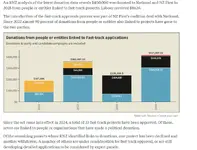
$1m in political donations from entities linked to fast track applications revealed
People and businesses asking for fast track approval of their projects have donated almost exclusively to National and NZ First.
www.rnz.co.nz

wizard of Tauranga
🏃
Ironman
- Thread starter
- #25,124
Public servants have been 1% of NZs workforce under Clarke and Key until Labour increased it by 30% under the guise of Covid.
1 - Covids finished
2 - there appears to have been no benefit to NZ of extra public servants over the past 3 years where according to the left everything’s been hopeless.
What’s the justification for keeping the 30% extra public servants to our historical levels?
1 - Covids finished
2 - there appears to have been no benefit to NZ of extra public servants over the past 3 years where according to the left everything’s been hopeless.
What’s the justification for keeping the 30% extra public servants to our historical levels?
A govco lever to reduce or increase unemployment?Public servants have been 1% of NZs workforce under Clarke and Key until Labour increased it by 30% under the guise of Covid.
1 - Covids finished
2 - there appears to have been no benefit to NZ of extra public servants over the past 3 years where according to the left everything’s been hopeless.
What’s the justification for keeping the 30% extra public servants to our historical levels?

Infinitely cheaper to have them on the doleA govco lever to reduce or increase unemployment?
wizard of Tauranga
🏃
Ironman
- Thread starter
- #25,127
The govt ‘creates’ jobs for unskilled people like requiring excessive traffic management requirements and mandating pointless scaffolding everywhere.A govco lever to reduce or increase unemployment?
With the flood of uni qualified people and AI reducing their needs will we get pointless white collar job requirements mandated by governments to soak up the talent pool and keep them busy?
… hang on, our councils already are bloated with pointless people doing pointless things. It’s already happening and going to get worse!
Labour are national lite

 www.scoop.co.nz
On Labour’s Vanishing Act
Chris Hipkins is testing the patience (and allegiance) of every centre- left voter. We may be now only a few months out from the election, yet Labour is continuing to refuse to say where it stands on a wide range of important issues.
www.scoop.co.nz

miket12
🏛️
Political Pundit
OCR held at 2.25%.... for now.

 www.nzherald.co.nz
The Monetary Policy Committee today voted to hold the OCR at 2.25 percent.
Annual consumers price inflation was 3.1 percent in the March quarter. The Middle East conflict is increasing near-term inflation and weakening economic activity. Inflation is expected to peak at 4.3 percent in the September quarter and to return to the 2 percent target mid-point in mid-2027. Currently, core inflation, wage growth, and medium- to long-term inflation expectations remain consistent with inflation returning to the 2-percent target mid-point over the medium term.
The global economic backdrop remains uncertain. Supply chain disruptions, higher prices for petrochemicals, and a more fragmented global trading environment are impacting the outlook. Growth will vary across countries, reflecting differences in energy intensity, fiscal support, and exposure to AI investment. On balance, New Zealand’s trading partners are expected to see weaker growth and higher inflation.
Domestically, business contacts and surveys indicate weaker confidence and spending. For some firms, rising costs are squeezing profit margins and curbing investment and hiring intentions. Consumer confidence has fallen sharply, and the housing market remains weak. Economic conditions continue to differ across regions and sectors, with high commodity prices supporting incomes in regional New Zealand.
The outlook for medium-term inflation pressures is also uncertain. These could remain elevated if households and businesses expect higher costs in future and build those expectations into price- and wage-setting decisions today. However, weak demand and elevated unemployment will dampen medium-term inflation pressures.
The Committee remains focused on ensuring that increased costs do not lead to elevated inflation over the medium term, while avoiding unnecessary economic volatility. On balance, the OCR will most likely need to increase sooner and by more than envisaged in the February Monetary Policy Statement. The pace of OCR increases will depend on the relative influence of persistent wage- and price-setting behaviour versus weaker economic activity on medium-term inflation pressures.
OCR on hold for now: RBNZ warns rates will rise sooner than expected
The RBNZ will also deliver a full Monetary Policy Statement today.
The Monetary Policy Committee today voted to hold the OCR at 2.25 percent.
Annual consumers price inflation was 3.1 percent in the March quarter. The Middle East conflict is increasing near-term inflation and weakening economic activity. Inflation is expected to peak at 4.3 percent in the September quarter and to return to the 2 percent target mid-point in mid-2027. Currently, core inflation, wage growth, and medium- to long-term inflation expectations remain consistent with inflation returning to the 2-percent target mid-point over the medium term.
The global economic backdrop remains uncertain. Supply chain disruptions, higher prices for petrochemicals, and a more fragmented global trading environment are impacting the outlook. Growth will vary across countries, reflecting differences in energy intensity, fiscal support, and exposure to AI investment. On balance, New Zealand’s trading partners are expected to see weaker growth and higher inflation.
Domestically, business contacts and surveys indicate weaker confidence and spending. For some firms, rising costs are squeezing profit margins and curbing investment and hiring intentions. Consumer confidence has fallen sharply, and the housing market remains weak. Economic conditions continue to differ across regions and sectors, with high commodity prices supporting incomes in regional New Zealand.
The outlook for medium-term inflation pressures is also uncertain. These could remain elevated if households and businesses expect higher costs in future and build those expectations into price- and wage-setting decisions today. However, weak demand and elevated unemployment will dampen medium-term inflation pressures.
The Committee remains focused on ensuring that increased costs do not lead to elevated inflation over the medium term, while avoiding unnecessary economic volatility. On balance, the OCR will most likely need to increase sooner and by more than envisaged in the February Monetary Policy Statement. The pace of OCR increases will depend on the relative influence of persistent wage- and price-setting behaviour versus weaker economic activity on medium-term inflation pressures.
We interrupt this broadcast for a public service announcementThe govt ‘creates’ jobs for unskilled people like requiring excessive traffic management requirements and mandating pointless scaffolding everywhere.
With the flood of uni qualified people and AI reducing their needs will we get pointless white collar job requirements mandated by governments to soak up the talent pool and keep them busy?
… hang on, our councils already are bloated with pointless people doing pointless things. It’s already happening and going to get worse!
This year, and every year, but this year more than most, the political framework of the right, and it's descent further right into fascism and authoritarianism, has been truly exposed for the moral, ecological, ethical and humanity related destructive disaster it truly is.
We see neoliberalism for what it is.
We see the corruption of both the right in New Zealand and around the world, in particular the US, for what it is. Open, naked and greedy.
We see the authoritarianism increasing here and around the world.
We see the fascism increasing here and around the world.
We have a far right genocidal state in Israel.
Increased homophobia, transphobia and misogyny.
We have Putin and Trump together, while America degrades into the authoritarian patriarchal nightmare it promised to be.
We have racism on the rise, especially with the New Zealand government's attacks on māori.
Economically this government has been utterly regressive and destructive.
Global warming is happening at alarming rates.
Media and journalism are being attacked, journalists are being murdered.
Science and Medicine are being attacked at alarming rates.
Disinformation is flourishing in this poisonous right wing dystopia.
But of course, the wealthy, the oligarchs - it's worked VERY well for them. And continues unchecked. And this is the most dangerous force of all.
This is the right. This is who they truly are if allowed to continue unchecked.
OF THE RICH, BY THE RICH, FOR THE RICH.
Regardless of your political and personal leanings, if you have a conscience, if you have empathy, a good heart, then at least have a think about whether this is what you want to be part of. You always have a choice.
Thank you for your attention, the usual bollocks will resume shortly.

Mr Drag
⭐
Rating Guru
Thank you for your concern, please come back to the asylum for fervor treatmentWe interrupt this broadcast for a public service announcement
This year, and every year, but this year more than most, the political framework of the right, and it's descent further right into fascism and authoritarianism, has been truly exposed for the moral, ecological, ethical and humanity related destructive disaster it truly is.
We see neoliberalism for what it is.
We see the corruption of both the right in New Zealand and around the world, in particular the US, for what it is. Open, naked and greedy.
We see the authoritarianism increasing here and around the world.
We see the fascism increasing here and around the world.
We have a far right genocidal state in Israel.
Increased homophobia, transphobia and misogyny.
We have Putin and Trump together, while America degrades into the authoritarian patriarchal nightmare it promised to be.
We have racism on the rise, especially with the New Zealand government's attacks on Maori.
Economically this government has been utterly regressive and destructive.
Global warming is happening at alarming rates.
Media and journalism are being attacked, journalists are being murdered.
Science and Medicine are being attacked at alarming rates.
Disinformation is flourishing in this poisonous right wing dystopia.
But of course, the wealthy, the oligarchs - it's worked VERY well for them. And continues unchecked. And this is the most dangerous force of all.
This is the right. This is who they truly are if allowed to continue unchecked.
OF THE RICH, BY THE RICH, FOR THE RICH.
Regardless of your political and personal leanings, if you have a conscience, if you have empathy, a good heart, then at least have a think about whether this is what you want to be part of. You always have a choice.
Thank you for your attention, the usual bollocks will resume shortly.


Lord Gnome of Mooloolaba
🏛️
Political Pundit
Public servants have been 1% of NZs workforce under Clarke and Key until Labour increased it by 30%

Lord Gnome of Mooloolaba
🏛️
Political Pundit
Man, I've read some stupid shit on here over the years but that's the most ill informed and utterly incorrect bollocks I've seen to dateInfinitely cheaper to have them on the dole

Just read his post, now I'm hiding under my bed.Thank you for your concern, please come back to the asylum for fervor treatment

John Nick
🔥
Streak Master
Hopefully Bed Leg Sam isn't there alsoJust read his post, now I'm hiding under my bed.


BabylonPink
🎲
Lucky Charm
Where is this lady penis?You still a bit excited over all this talk about lady penis?
For research purposes...
John Nick
🔥
Streak Master
Vibrating and buzzing conversationWhere is this lady penis?
For research purposes...
miket12
🏛️
Political Pundit
Labour are national lite
On Labour’s Vanishing Act
Chris Hipkins is testing the patience (and allegiance) of every centre- left voter. We may be now only a few months out from the election, yet Labour is continuing to refuse to say where it stands on a wide range of important issues.
Election 2026: When will Labour release policy? It may not be when you expect – Jamie Ensor
When will the Labour Party release new policy for voters to chew over ahead of the election?Putting aside speculation over Finance Minister Nicola Willis’ Budget tomorrow, it’s probably the key question sloshing around political circles now.
Well, maybe it’s second to whether one would rather fight 100 duck-sized horses or a horse-sized duck?
While the so-called small-target strategy appeared to be working well for Chris Hipkins’ team, the party has since tripped up on several occasions trying to balance its rhetorical opposition to the Government’s actions with explaining what it would do instead.
Taking aim at the Government for cutting a climate resilience fund? Difficult when you won’t commit yourself to replenishing it.
Rebuking ministers for lacklustre support for Kiwis during a fuel crisis? Somewhat shallow when you have few alternative ideas to put forward.
Less than six months out from the November 7 contest, Labour’s dearth of new proposals for the public seems to have caught up with the party.
Calling move-on legislation a “terrible reflection on our society”? Hollow when you can’t commit to repealing it.
It also means the few policies the party does have are coming under extra scrutiny.
The Herald’s questioning of Labour’s Future Fund policy last week confirmed the party won’t be able to tell New Zealanders prior to the election what assets will be attached to it or how many jobs it’s expected to create.
Pressed on the policy, Hipkins suggested New Zealanders aren’t concerned about the details.
“I don’t think the public really care which companies are going to go in or not,” he said.
Considering Labour is polling higher than all other political parties and it continues to be deemed the most capable of addressing Kiwis’ main concerns, perhaps Hipkins has a point.
Perhaps Kiwis are less interested in how a policy will work, and more interested in a party’s ambition or vision for the country.
Despite clearly becoming frustrated by the questions over the Future Fund, Hipkins was still able to promote what that policy is really about: a means to get across the argument that Labour would safeguard New Zealand assets, while he claims National would sell them off (National hasn’t confirmed its election policy in this space).
The Future Fund was one of a handful of proposals Labour made to the electorate late last year.
The party’s website features five (though some are essentially extensions of the same policy): the Future Fund, a capital gains tax (CGT), free doctor visits funded by that CGT, free cervical screening (that comes with the Medicard announced alongside the free doctor visits) and a family doctor loan scheme (to help ensure there are GPs for people to see for free).
Labour has made some other promises not listed on its website, like an expansion of a gaming rebate and repealing the Regulatory Standards Act.
But its momentum stalled this year. The party will say that’s in part down to needing to test its policies against the information to be revealed in the Budget, upended by the fuel crisis spiralling out of the war in Iran.
Parties don’t need to see the full Budget to cost individual policies. The Opposition can do its own economic modelling, based on its own research, answers to Written Parliamentary Questions, and by using other parliamentary tools. That can then by updated when the latest figures come in.
In 2017, Labour produced a fiscal plan for the election which it then updated after the pre-election economic and fiscal update was published.
But it does become more difficult to calculate those estimates in turbulent economic times, like now when Treasury is updating its forecasts within weeks of the actual Budget.
Labour MPs, including Hipkins, have said they want to make promises the party can keep.
Barbara Edmonds, Labour’s finance spokeswoman, has framed the party’s decision not to release specific details about plans for the Future Fund as one of discipline.
She said the party was “not going to be reckless and just pick a couple of assets and pop them in without actually knowing what the fiscal cost is”.
“I’m very measured and very considered when it comes to that sort of policy development,” she told the Herald.
Anyone hoping to hear on Budget night how Labour’s plans have been impacted by the latest fiscal forecasts and Government decisions will likely be disappointed.
The party won’t be immediately releasing policy or any costings in the hours after the Government opens the books. It will understandably take some time to make the necessary adjustments.
Instead, like every election year, the Budget will kickstart a new phase of a campaign that is very much already underway.
Labour will lose its key defence for a lack of policy, while National will have to start properly transitioning away from creating Government policy to offering something fresh for November 7.
It’s something National’s coalition partner, New Zealand First, has gone full-bore on in recent weeks.
National has unveiled some election policies, like removing good-character considerations during the sentencing of sexual offenders, lifting KiwiSaver contributions and restricting commercial fishing in the Hauraki Gulf.
At this point in the electoral cycle ahead of the 2023 election, National in Opposition had released several policies, including the changes it would make to income tax brackets, its intent to reverse interest deductibility changes, its promise to set up bootcamps for serious young offenders and its proposed ban on gang patches in public places.
So when may Labour give us something new?
Hipkins said on Tuesday: “We’ll let you know in due course, but we are going to scrutinise the Budget carefully because I want to be very clear that when I make promises, I know I can deliver on them.”
“There’s not going to be anything straight after the Budget. We are actually going to read the Budget,” the Labour leader said, claiming Willis hadn’t properly examined the 2023 pre-election fiscal update.
“You’ll see some more policy for us in June.”
From a party not promising some policy detail until after November 7, that raised an obvious question.
Did he mean June this year? Hipkins, laughing, assured the Herald he did.

Jamie Ensor: When will Labour release policy? It may not be when you expect
ANALYSIS: It's a key question swirling around political circles.
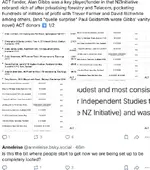
Anneleise (@anneleise.bsky.social)
This author has chosen to make their posts visible only to people who are signed in.
 bsky.app
Similar threads


- Replies
- 3
- Views
- 4K
