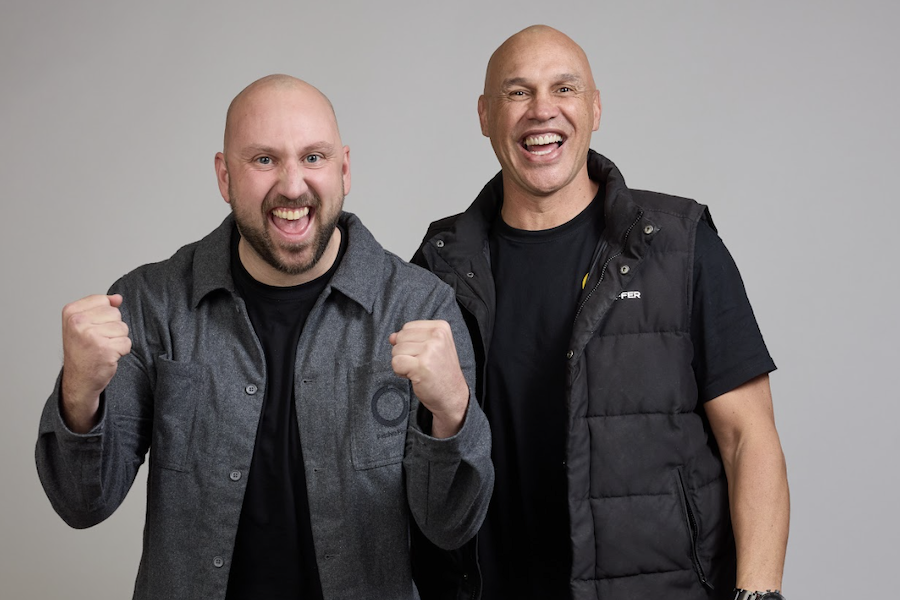
#33 Awen Guttenbeil
Awen is the Owner, Founder, Managing Director of Passive Fire NZ and Founder of QAntum Technology.
Beyond the full-time whistle
Glenn Baker
July 7, 2025
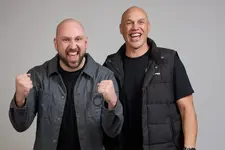 Pictured above: Passive Fire NZ General Manager Joe Pope (L) and Founder Awen Guttenbeil.
In 2016
Awen Guttenbeil called time on his professional sports career and has since completed a highly successful transition into business ownership. Talking to NZBusiness, the former Warrior explains the fascinating crossover between business and high-level sport and the many lessons he has learnt along the way.
For ten years
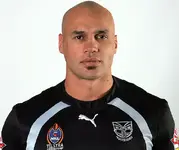
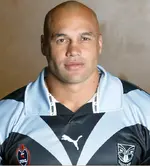
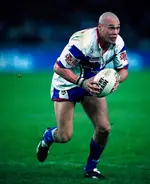
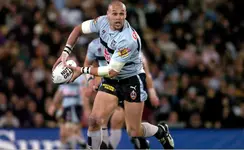
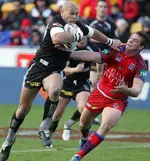
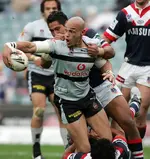
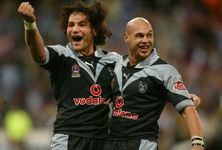
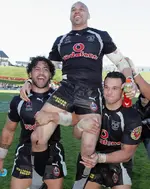
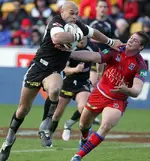
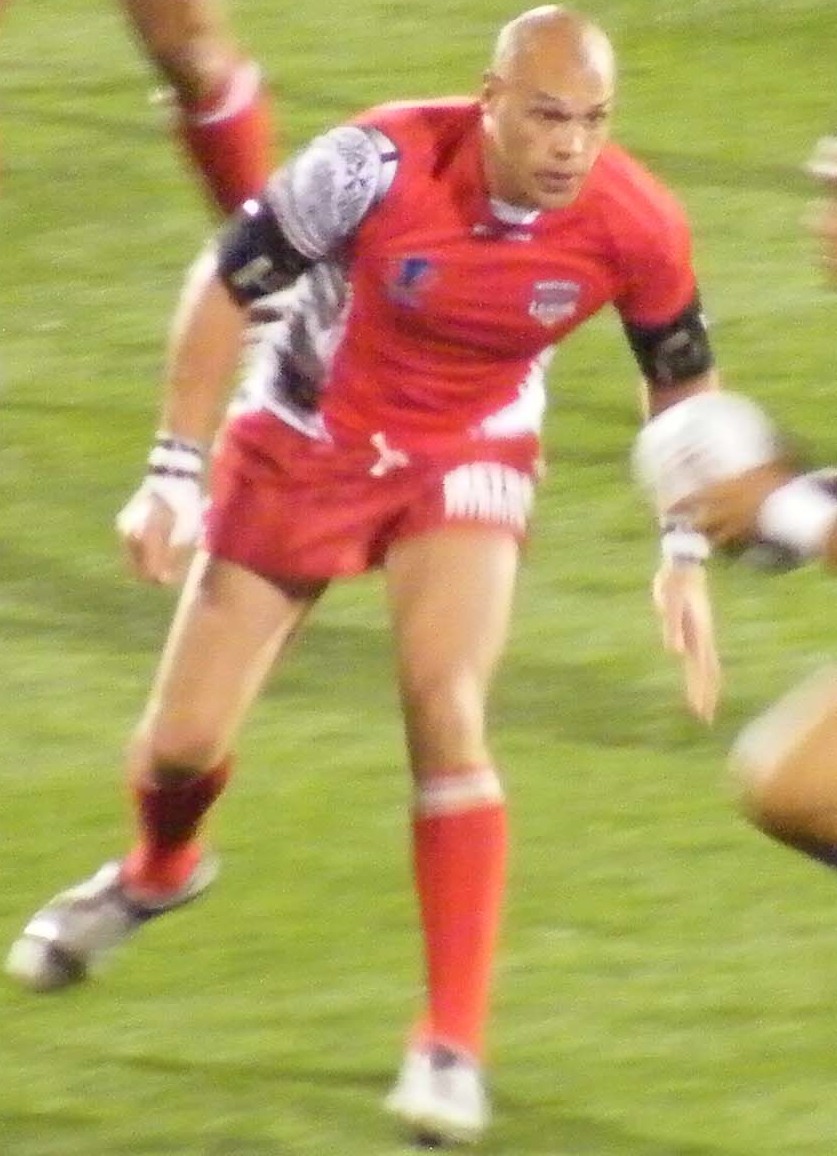
Awen Guttenbeil lived under New Zealand’s public spotlight as a professional rugby league footballer proudly wearing the Warriors jersey. Awen was not only a formidable member of the squad but also became a well-known professional broadcaster for Sky and Whakaata Māori.
Today the father of two heads up Passive Fire NZ, a company he launched in 2016 with the goal of ensuring that every building in New Zealand is passive fire certified to a global standard.
Making the transition from professional sport to successful business ownership may appear difficult, but for Awen the process was made a lot easier through his interest in technology and its application in modern-day construction.
“I’m always looking at opportunities that I feel I can really add value to and where I can continue to grow and learn,” he explains. “Construction is something that I’ve always been interested in.
I wanted to be an architect while I was at school but left in the 6th form to become a professional athlete, so couldn’t follow that path. But I was always interested in it.”
Awen says that as he got older, he became involved in property development with his family which led to a deeper interest in construction.
“I’m interested in how physical spaces are put together. That led to the Passive Fire NZ opportunity and, more recently QAntum Technology, which is a solution used to test the quality of fire protection in construction.”
How a sport background impacts business success
Awen has witnessed both winning and losing teams and cultures during his sports career, and that has definitely influenced his approach to business. It’s all about people, he says, so at Passive Fire NZ he always ensures that:
- They have the right people on the team.
- Those people are empowered and feel they have direct input in the results achieved.
- Team members are continually learning and growing, adding fulfilment to their lives, and
- His people are provided metrics or scoreboards of some sort that deliver direct feedback and measure results.
“I’m still looking to win the game or match,” he laughs, “it’s just a different type of game these days.”
Awen shares some of the many lessons and approaches he’s transferred from the footy field to his business. The big one is around team building.
“I really view the team as a team. For example, I regard the recent appointment of Joe Pope from operations manager to GM as moving from captain to coach.
“We had to get the right person in place before we could make that move, and know that the team had the best chance. I think there is a lot of crossover between business and sport and I’m really interested in that intersection,” admits Awen.
“We were lucky enough to have Joseph Parker come and talk to the Passive Fire NZ team at a recent strategy day. It was surprising how much we took out of that day, hearing about Joseph’s approach to his sport and how we could apply that thinking strategically in our business.”
Joseph Parker joined the Passive Fire team recently for a strategy day – “There are great business learnings to be had from the world of professional sports,” says Awen.
The game of business: Making the transition
Transitioning from sport to business has provided a number of valuable lessons for Awen – the biggest being that your identity isn’t tied to you as an athlete. Also, the associated skills learned from playing sport can translate perfectly into the business world if you frame it correctly.
“Your sports career can provide you with some ‘wind assistance’,” explains Awen. “However, you need to be smart about how you leverage that and ensure that what you’re offering is a ‘painkiller’ and not a ‘vitamin’.
“In other words, if you’re transitioning to business, make sure you’re really solving a pain point and not just providing a ‘nice to have’.”
In business it’s important to deliver [for clients] and find a way to measure that, says Awen. He particularly likes to gamify measures such as KPIs. “Then you know if you’re winning or losing and can adjust accordingly.
“It’s a different kind of game these days for me, but I’m really enjoying it.”
Driving forward in a tough market
For Awen, the biggest driver is ensuring his Passive Fire NZ team takes ownership of what they’re doing.
It’s about having them operate for the greater purpose of ‘Keeping Families Safe’, he says. It’s not only about the paycheck received.
“We always bring them back to that bigger purpose. That’s rewarding for the whole team, and for me.
“I think we’re making a difference, keeping people safe. And with the financial market being so tough for the past couple of years, this has become even more important for us.”
Awen explains that the business is always about setting standards and fulfilling their potential. It’s not about what the competition is doing.
“This is why during covid, we set out to become the only passive fire company in New Zealand with three ISO standards. We utilised that [covid] downtime well!”
Getting a kick out of coaching
Awen hasn’t always been very comfortable when it comes to coaching others. He recalls how 14 years ago he was part of a panel at an EO (Entrepreneurs Organisation) event talking to business owners and entrepreneurs about sport and its intersection with business.
“Back then I felt very intimidated and didn’t know a lot about business,” he recalls. “So, I asked if I could become involved with EO. I knew that for me to grow and learn I had to change my environment.”
Being accepted into an EO incubator program proved to be a game changer. “It was a risk, and I’m really pleased I did it,” says Awen.
“Today I get a lot out of coaching and creating opportunities for our team members. I’m still very interested in others’ journeys and always looking to learn about business journeys.
“It’s so inspiring.”
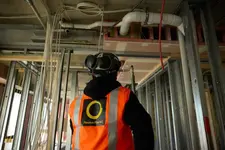
The Passive Fire logo is a mark of quality.
Up for the challenge
Awen’s not afraid to challenge himself and do things that he admits he finds scary.
For example, he’s currently working with a company in the quality assurance tech space, as well as promoting Passive Fire team members in order for them to make decisions he would normally make.
This requires him to step back from the business and let go of the reins.
“It’s like no longer being the captain of the team who pulls on the playing jersey to get the win, but instead, sitting out as the coach to analyse the culture of the team, the opportunities, and then putting a game-plan together, always with the belief that those wearing the jersey will get the result.
“This is new to me. I’m enjoying it so far.”
When asked where he sees himself in ten years’ time, Awen says what he’s doing now is a stepping stone to something even bigger, and he’s really still in exploration mode.
“Right now, I’m focused on the new technology we’re bringing to market and supporting my team to bring their best every day.
“Alongside my business interests, I’m still very passionate about sports and community. I’m also a One NZ Warriors Ambassador. So, amongst all that, there are still plenty of adventures to be had.”
Former Warrior Awen Guttenbeil explains the fascinating crossover between business and high-level sport and the many lessons he has learnt along the way.

nzbusiness.co.nz

Passive Fire NZ is New Zealand’s highest performing, most certified passive fire solutions company.
Founded by former NZ Warrior
Awen Guttenbeil, the team is modelled on the dynamics of high-performing sports teams who are united in the pursuit of excellence. Awen’s passion for property and development ran alongside his sporting career, but it was always family that shaped his decisions.
The safety of his whānau – from parents to children – became the lens through which he saw everything.
Passive Fire NZ was built around the desire to keep families safe – recognising that a higher standard of quality in fire protection was needed.
Our vision is to lift the standard of fire protection across Aotearoa, one building at a time, and we’re proud to say that today, Passive Fire NZ is the mark of quality when it comes to fire protection in New Zealand construction and remediation work.
We Exist To Keep Families Safe.
This simple but powerful purpose puts people at the heart of everything we do – a constant reminder that our work saves lives. Whether it’s the building occupants, our on-site teams, the contractors we collaborate with, or the communities we serve; safety is our responsibility.
We do it for our team and for our whānau.
Founded by Awen Guttenbeil in 2016, Passive Fire NZ was formed to ensure every building in New Zealand remains Passive Fire certified to a global standard.

www.passivefirenz.co.nz





 www.rugbyleagueproject.org